When an off-road vehicle plunges into seemingly flat mud, with wheels spinning and the body sinking, every off-road person has experienced the feeling of powerlessness at that moment. Mud rescue is not simply a matter of forceful pulling, but a special game that requires patience, skill, and proper equipment.
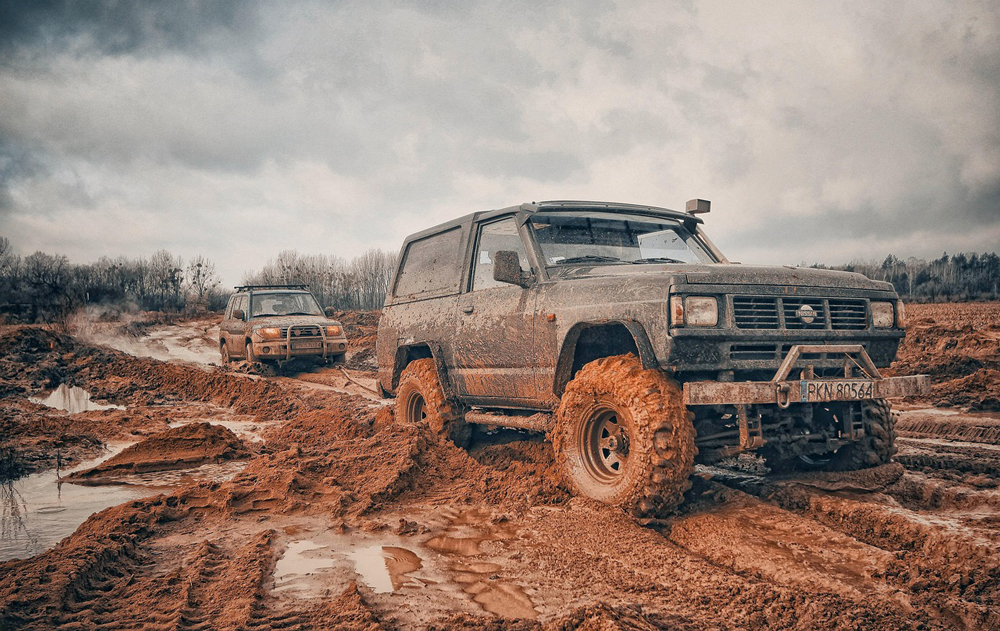
The correct reaction at the moment of getting stuck in a car
Stop stepping on the accelerator immediately when the wheels start to spin. This is the first iron rule of mud rescue. Continuing to idle will only make the tires sink deeper and deeper like drill bits until the chassis is supported. Shift into reverse gear and try to retreat along the original path. If it is ineffective, immediately get off the car and observe.
After getting off the car, you need to complete the "three questions for getting stuck in the car": Is the chassis touching the ground? Which wheel loses its grip? What is the depth and properties of the mud (clay, thin mud, or swamp)? These judgments will determine the selection of subsequent rescue plans.
Selection of core rescue equipment
The mud specific trailer belt is the primary equipment. Unlike regular trailer straps, the mud version is usually longer (9-15 meters), made of high-density polyethylene material, and has extremely low ductility. This is because in the mud, the elastic trailer belt can cause trapped vehicles to "jump" and sink deeper. The surface of the rope should have anti mud penetration properties and remain soft and easy to clean.
D-type shackles must be made of forged alloy steel material, and the nominal load must be greater than the fracture strength of the trailer strap. Shackles in mud are often wrapped in mud, and checking whether the threads are fully tightened becomes a key step.
The escape board plays a special role in the mud. The anti slip plate designed specifically for muddy ground has deeper patterns or metal protrusions on its surface, which can provide adhesion by cutting into hard mud layers. Multiple anti slip plates can be spliced together to form a temporary road surface, especially suitable for severely sunken vehicles where the chassis has already touched the bottom.
The winch and anchor system are crucial when there is no rescue vehicle available. Natural anchor points are scarce in the mud, so it is necessary to carry a mud anchor - an umbrella shaped metal structure that can be buried underground and can withstand several tons of tension when buried deep enough. When used in conjunction with tree hugging straps, reliable anchor points can be found in areas with trees.
Hierarchical rescue operation process
Step 1: Cleaning and Preparation
Wear long rubber shoes, and use the on-board shovel to clean the mud at least one meter before and after the tire until it touches a relatively solid hard layer. Insert the skid plate into front of the tire at a slight angle to create an attachment point for starting. If the chassis touches the ground, it is necessary to first use a monkey climbing pole or an inflatable jack to lift the vehicle body, and lay tree branches, stones or special pads under the chassis.
Step 2: Bicycle self rescue attempt
Engage low-speed four-wheel drive, select second or third gear (switch from automatic to manual mode), maintain a straight direction, lightly press the accelerator and try to slowly drive onto the skid plate. The key is to feel the change in wheel adhesion. Once there is a tendency to move forward, keep the throttle stable and do not suddenly increase power.
Step 3: Vehicle to vehicle soft traction
When self rescue is ineffective, rescue vehicles need to intervene. The rescue vehicle should be parked on solid ground and maintain a straight traction angle with the trapped vehicle. The drivers of the two vehicles need to communicate clearly through gestures or walkie talkies, and agree on the "prepare, slow pull, stop" signal. The rescue vehicle is attached to low-speed four-wheel drive, and after the trailer belt is slightly stretched, it applies continuous and steady force, gradually increasing force like a tug of war, to avoid instant impact.
Step 4: Winch Rescue
Used on steep slopes or when rescue vehicles are unable to approach. Connect the winch cable to the sturdy anchor point of the trapped vehicle through a shackle, and cover the center of the cable with a heavy damping material. When operating the winch, maintain a constant tightening speed, and the trapped driver lightly steps on the accelerator at the same time to cooperate, forming a "dual power" synergy.
The iron law of safety that must be followed
In mud rescue, everyone must stay away from the areas on both sides of the trailer. Once the trailer belt wrapped in mud breaks, its rebound force is still sufficient to cause serious injury. The step of attaching a suspension damping device (heavy clothing or specialized damping bag) to the trailer cannot be omitted.
The inspection of connection points needs to be particularly meticulous. Mud may conceal hidden dangers such as loose shackles and trailer hooks. After each application of force, the connection status should be rechecked.
Preventing the rescue vehicle from sinking is equally important. After the rescue vehicle comes to a complete stop, it is recommended to turn off the engine and tighten the handbrake, or place a stopper behind the wheels. The surface of the muddy ground is wet and slippery, and the rescue vehicle itself may also be pulled towards the sinking point during towing.
The Long term Wisdom of Mud Driving
After escaping from the trap, do not rush to accelerate. Drive slowly to a safe area, thoroughly clean all rescue equipment of mud, and check for wear or damage. The sand particles in the mud will exacerbate fabric wear after drying, so it is necessary to thoroughly rinse the trailer belt with clean water and air dry it.
Conclusion
Mud rescue is the most common challenge in off-road travel and also the scene that tests the team's tacit understanding the most. It teaches us not only how to get out of the quagmire, but also the ability to remain calm and judge in the face of difficulties, use equipment reasonably, and fully trust partners. Every successful escape from the muddy terrain is the most vivid medal in off-road memory.


