Home » News » Industry News » Wilderness Travel: The Exploration Path of Off road RV Trailers
Wilderness Travel: The Exploration Path of Off road RV Trailers
Views: 656 Author: Thinkwell Publish Time: 2026-02-27 Origin: Site
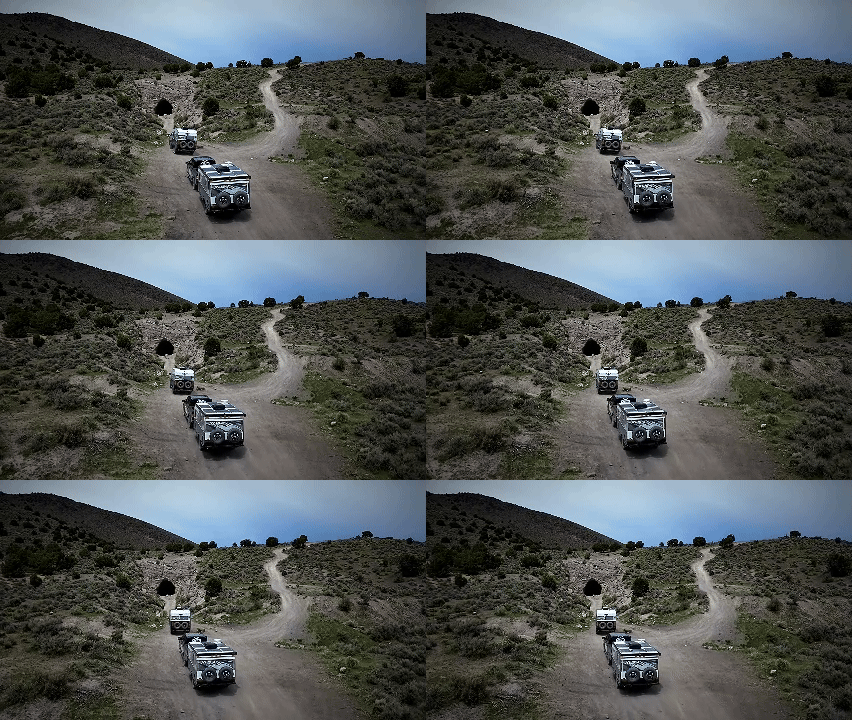
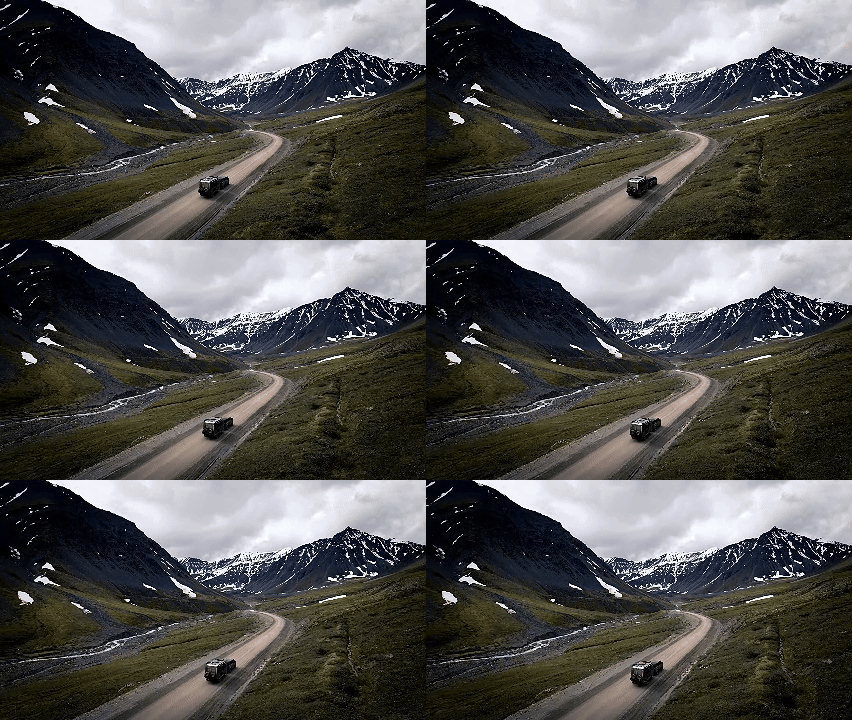
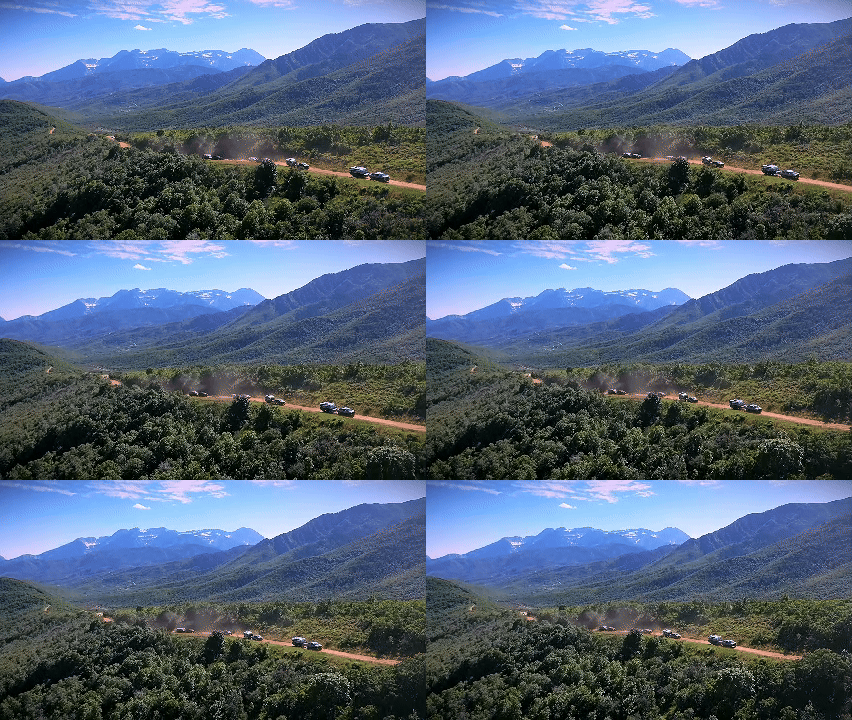
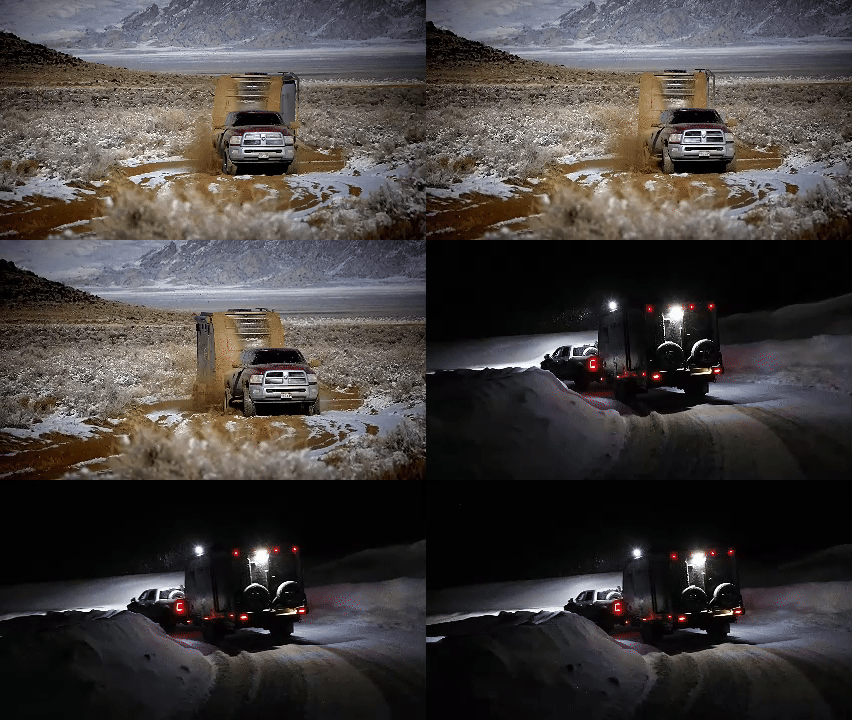
When the exploration boundary of off-road vehicles meets the comfort of RV travel, it gives birth to the unique mode of travel of off-road trailer RVs. It makes it possible to venture deep into the wilderness while bringing the warmth of home to the ends of the earth. However, behind this combination lies a comprehensive test of equipment systems and driving techniques.
Core traction equipment system
The off-road trailer arm is the first level connecting the vehicle and the RV. Unlike traditional road trailer arms, off-road versions typically have multi angle adjustment functions to adapt to the drastic changes in body posture under undulating terrain. Its high-strength forged structure can withstand the twisting stress under cross axis road conditions, while the surface rust prevention treatment is suitable for water and sediment tests.
Off road trailer specific shackles and connectors need to have higher impact resistance margins. In rugged terrain, the instantaneous impact force can reach several times that of highway driving, so the nominal load of all connecting components must have sufficient redundancy. Equipped with anti slip safety chains and cross wrapped to ensure that even if the main connection fails unexpectedly, the RV can still be temporarily controlled.
All terrain off-road tires are the foundation of RV stability. The carrying capacity index must be higher than the total weight of the RV at full load, and the tread design should take into account both road quietness and off-road mud discharge requirements. The tire pressure monitoring system carried with the vehicle can monitor the tire status in real time, while the portable inflation pump allows for adjusting tire pressure according to different terrains at any time.
Unique configuration of off-road RV
The independent suspension system is the core that distinguishes off-road RVs from ordinary trailers. It allows each wheel to move independently up and down, maintaining tire contact in cross axis terrain and avoiding twisting and stress on the vehicle body. The high ground clearance and metal chassis protective plate protect key components such as water tanks and batteries from rock impacts.
All terrain parking support is crucial in the campsite. Traditional parking legs may sink on soft ground, so off-road RVs are often equipped with adjustable legs with large base areas and even hydraulic balance systems to ensure a smooth sleeping surface even on sloping ground.
Safety guidelines throughout the journey
Before departure, a "double check of the connection system" must be performed: check whether the trailer ball joint buckle is fully closed, whether the safety chain is correctly cross hung, and whether the light signal is synchronized. The weight distribution between the tractor and the RV needs to be precisely controlled to ensure that the RV's center of gravity is slightly forward and avoid high-speed swinging.
During driving, it is necessary to follow the "terrain adaptation speed rule": maintain the standard speed limit on paved roads, immediately reduce speed after entering unpaved roads, and refer to the "comfortable bumpy feeling". If the speed is too fast, it will cause fatigue of the connecting system and even damage to the body structure. When crossing gullies, it is important to keep the tractor and RV in a straight line to avoid excessive lateral force on the RV during sharp turns.
Emergency rescue equipment reserve
In addition to conventional rescue equipment, off-road RVs should also carry spare trailer attachment components and sufficient trailer extension straps - long-distance towing is often the only option when turning or rescuing on narrow mountain roads. Carrying satellite communication equipment, as mobile phone signals are often absent in the wilderness.
Off road trailer RV travel expands the comfort radius of life to any corner that four-wheel drive can reach. It teaches us not only how to go further, but also how to maintain enthusiasm for life and reverence for safety in the wilderness far away from civilization. Every safe return journey is the best validation of this complex system.